


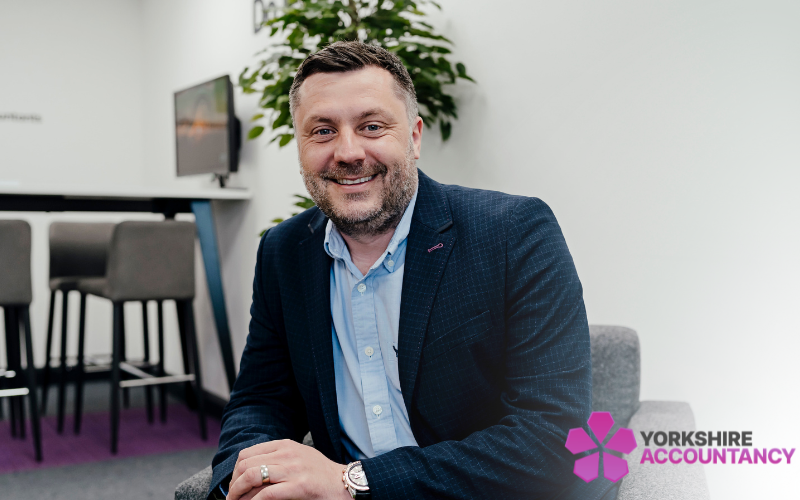
By Phil Ellerby, Managing Director at Northern Accountants
For years, accountancy was seen as being built on hindsight. We focused on recording what had happened, filing what was required, and ensuring every compliance box was ticked. If your accounts were accurate and the tax returns were on time, that was considered a premium service.
Fast forward to today, and that’s simply expected. Compliance has shifted from being a premium to a baseline service. It’s no longer the reason clients choose an accountant – it’s the minimum standard they expect to be delivered. Getting the numbers right isn’t impressive anymore –advisory-led services, real conversations, and forward-looking insight are what matter.
I speak to business owners every day, and they all say the same thing – they want clarity about what happens next.
Increasingly, conversations are less about last year’s performance and more about the future, whether that be when to recruit, whether to invest, how to fund growth, what an exit might look like, or whether an acquisition is realistic. In other words, they want foresight, not hindsight. The modern accountant has to be a futurist, not a historian.
Technology is a big reason this shift is happening so quickly. AI and automation are transforming the cost and speed of compliance work. Tasks that once took hours –such as data entry, reconciliations or basic reporting – are now largely automated. Even at the top end of the profession, we’re seeing major firms acknowledge this publicly, citing AI as a reason that audit and compliance fees should decrease.
We’re seeing the same thing play out across the region. But the narrative that technology can replace our profession misses the point entirely. If anything, it does the opposite. It frees us up to do more of the important stuff. And this is where a truly effective accountant has the chance to stand out.
By stripping away repetitive tasks, the technology advancements we’re seeing will give accountants the time to focus on being able to build on their relationships with clients and have meaningful conversations that offer genuinely sound advice. This allows us to humanise the numbers. Instead of simply presenting reports, we can sit down with business owners and talk about what those numbers actually mean and what the organisation should do differently as a result.
In many ways, it’s a return to our roots. There was a time when clients regularly met their accountant face-to-face to discuss their business, not just their tax bill. The difference now is that those conversations are backed by far better data, smarter forecasting tools, and deeper insight than ever before. The advice can – and should – be more strategic.
What the market often labels as “advisory” actually spans two very different levels. The first is enhanced finance director support, covering things such as management accounts, budgets, and cashflow forecasts. These services are hugely valuable and give owners much better visibility and control, but fundamentally, they’re still reporting performance.
The next step up is true strategic advisory support, or what many would say reflects the mindset of a chief financial officer. This isn’t about compiling numbers – it’s about using them to shape decisions. It’s helping clients plan an exit, structure an acquisition, assess funding options or possibly even model the impact of launching a new product line. It’s scenario planning, stress testing, and setting a clearer route.
Accountants can add extraordinary value beyond bookkeeping, and 2026 is the perfect time to prove that. Business owners think nothing of paying a legal professional hundreds of pounds an hour for specialist advice, because they understand the commercial impact that guidance can have. Accountants should be viewed in exactly the same way. We work across hundreds of businesses and see first-hand what works, what fails, and where the risks lie. That perspective is powerful, and it deserves to be recognised and priced accordingly.
Interestingly, we’re also seeing the role broaden beyond ‘just’ finance. Many owners now lean on their accountant as a sounding board for technology decisions, succession planning and even personal resilience. Running a business can be isolating, and having a trusted advisor who understands both the numbers and the person behind them, is increasingly important. The relationship has become more holistic.
For the profession, it’s a genuinely exciting time. Technology is reducing the cost of compliance, expectations are rising, and accountants are finally being given the space to do the work that really makes a difference.
The firms that succeed over the next decade won’t be those who simply report the past more efficiently. They’ll be the ones who help shape the future – and that’s the real role of the accountant in 2026 and beyond.
Image supplied by Northern Accountants
