


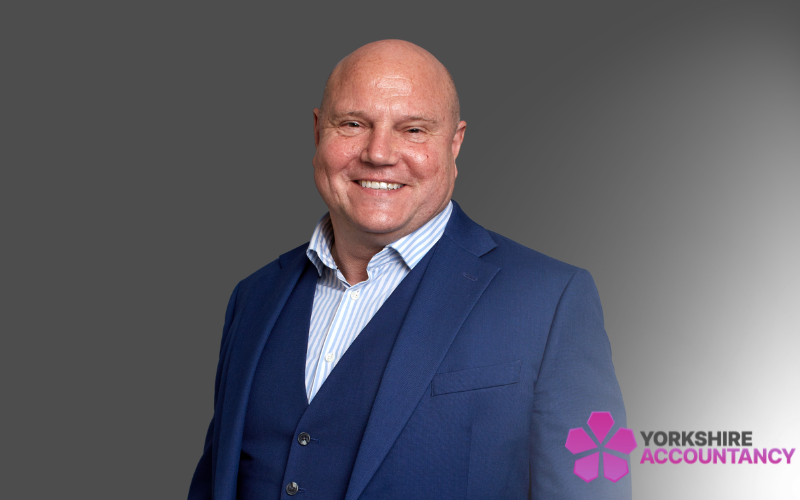
Artificial Intelligence is rapidly changing the way businesses operate, and the accountancy profession is no exception. We hear from Parsons Chartered Accountants’ Managing Partner and Head of Corporate Finance, Ian Parsons, on his perspective on how AI is influencing both the profession and the businesses they support as a firm.
- AI has become one of the biggest talking points in business. From your perspective, how is it already changing the accountancy profession?
As a firm we have been using AI in transaction processing systems – bookkeeping, scanning invoices – for quite a number of years now and it’s pretty widely taken up.
What it is doing to the accountancy profession is meaning that many more people are able to do their own bookkeeping and low-level transaction processing and, do it reasonably well with the help of AI.
- We’re seeing more businesses using AI tools to answer tax and financial questions before speaking to their accountant. Where do you see the biggest opportunities, and what are the biggest risks?
The biggest risk is that you have to be careful about the questions you ask. You can often get a misleading answer – the AI software as it stands, will answer the question if asked but it may not answer the one that you intended or answer correctly.
Taking tax and financial advice from AI without having some sort of knowledgeable intervention at some point is risky.
The biggest opportunities I see, is that AI will point you in the right direction and, as you continue to ask AI questions, it will answer with a reasonable degree of accuracy. The opportunity is there for it to help and assist but I don’t think it is going to replace speaking to an accountant who can interpret what it’s saying and turn it into normal language.
- Which areas of accountancy do you believe AI will improve the most over the next five years? Are there any areas where you believe human expertise will always remain essential?
I think most of the routine accountancy work that we do as a profession can be done by AI to a great extent. It can do the bookkeeping; it can pull the transactions together, report management information, take draft accounts that people have prepared themselves and turn them into statutory accounts and, probably interpret some of that to do the tax returns.
AI will inevitably change the profession, and I think accountants will become the professionals who communicate the information to the clients turning it into real world practical advice rather than just doing the mechanics of preparing information.
- How is Parsons Chartered Accountants embracing AI within the business? Are there any technologies or processes you’ve adopted that are already delivering benefits for your team or your clients?
We are embracing AI as a practice with an increasing number of people using it on a day-to-day basis. We’re a regulated business so are incredibly careful as client data is important so we can only use AI to the extent that it’s in a secure environment. I think that will continue to develop – we can produce things that are useful and practical and help us speed up what we do, then we’ll use it.
If it slows us down or gives us areas of uncertainty, then we won’t use it!
- What advice would you give to business owners who are keen to use AI but are unsure where to start?
I would say, find someone who is using it and is getting some results from it. Talk to them about how they are doing it. Ask them to turn it into simple steps – once you understand the basics, you can experiment with what it can do.
- Do you think AI will change what clients expect from their accountant? If so, how do you see the role of the trusted adviser evolving?
Yes, without a doubt. I think the days of giving a client a set of accounts and tax returns and saying sign here will be over – as they’ll be able to do that themselves if they want to. I think what clients will be expecting from their accountants is advice, interpretation of the data, analysis of what’s going to happen next based on what we are seeing in the numbers. It will be much more commercial conversations about the future and what it all means.
- Looking ahead, what do you believe the accountancy profession will look like in five to ten years’ time? What excites you most about the future?
I think the accountancy profession will stop being who process numbers and start being people who communicate ideas that come out of the numbers.
I see the profession being much more around communication skills than simply doing the numbers. I do think that people will still need to really understand the numbers and be good at the accounts themselves as you’ve still got to be able to recognise when AI gets something wrong and be able to spot that, fix it and talk to the client about what it means.
- Finally, if you could give Yorkshire business owners one piece of advice about AI and financial decision-making, what would it be?
Give it a go – but be careful about what it tells you. Always double check and get somebody who knows what they are doing to look over it.
Image provided by Parsons Chartered Accountants
